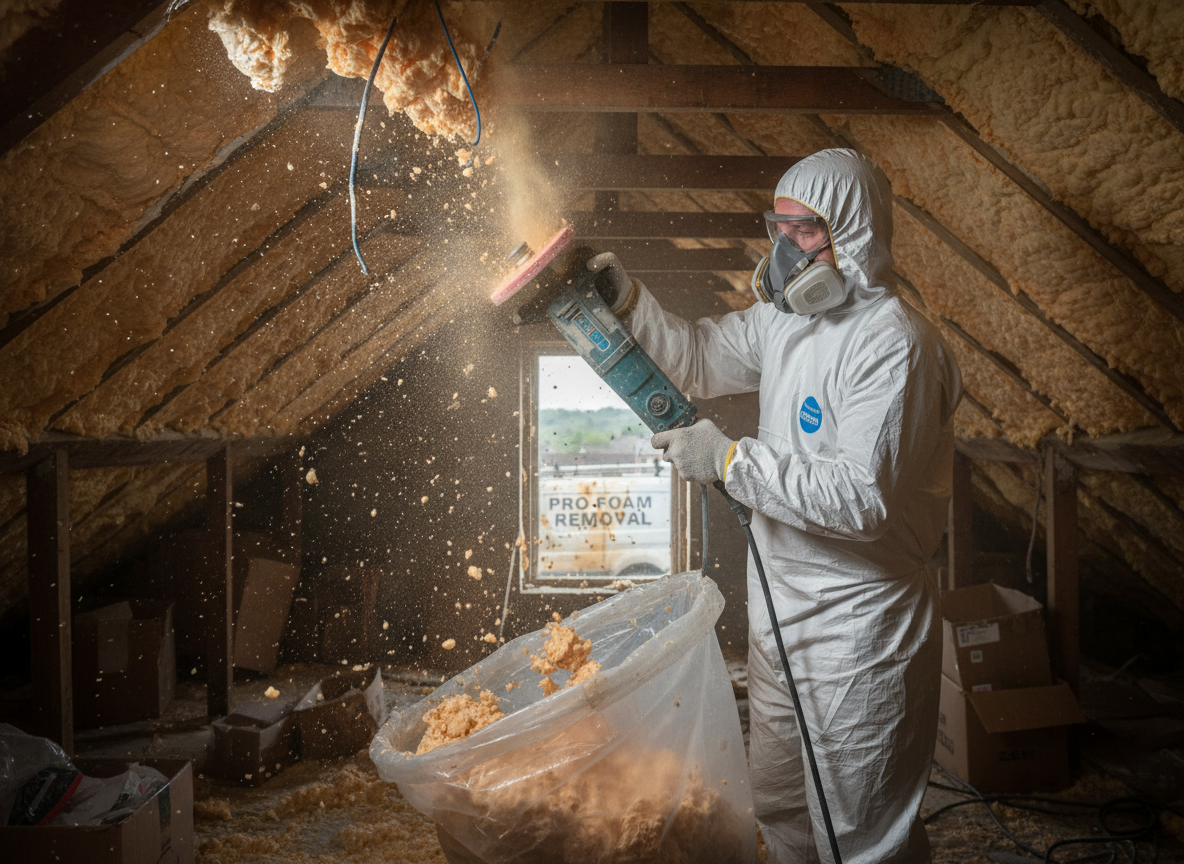
Closed cell spray foam bonds tightly to timber, masonry and slate in Yeovil properties, especially in pre-1970 terraces and post-war semis common around the town centre and along the A37. Its high density and closed structure trap moisture against rafters once ventilation is blocked, which is a frequent issue during Somerset winters when driving rain hits south-facing roofs. Removal requires mechanical cutting followed by careful scraping to avoid damaging original lath and plaster ceilings below.
Edge cases in the Yeovil area include foam applied over electrical cables in converted lofts near the old cattle market site and foam that has wicked into stone walls of Victorian terraces off Princes Street. These jobs demand dust extraction and temporary propping because the foam can pull friable mortar when peeled. Homeowners often discover the material was installed without proper roof ventilation, leading to condensation staining on ceilings that only appears after several damp winters.
Regulatory notes for Somerset properties include checking that any replacement insulation meets current building regs for breathability in solid-wall homes. Closed cell removal creates significant waste that must be bagged and taken off site; we never leave debris in gardens or on pavements around the BA20 postcode.
Technician insight
In Yeovil, the thing that catches most people out with closed cell spray foam removal is how the foam has often been sprayed right up to the eaves on 1930s semis, blocking the only remaining airflow path and forcing us to work from inside the loft rather than from the roof edge.
Yeovil Terrace Loft Clearance
Homeowner in a 1920s terrace near the town centre reported black mould on bedroom ceilings after years of closed cell foam in the loft. We found the foam had filled every vent and was holding moisture against the rafters. Mechanical removal and thorough cleaning restored airflow; the ceiling staining stopped after the next wet winter.
How it works
- 1
Site Assessment
Inspect loft, walls or voids to map foam depth, substrate condition and access points in the specific Yeovil property.
- 2
Containment Setup
Install dust barriers and negative air machines to protect living spaces below, especially important in terraced homes with shared walls.
- 3
Mechanical Removal
Cut and scrape foam in sections, working from the ridge down to avoid debris falling into joist voids.
- 4
Substrate Cleaning
Remove residue and inspect timber or masonry for rot or damp before handover.
- 5
Waste Disposal
Bag all material and remove from site, leaving the area clear for follow-on trades.
Pricing
Pricing depends on access, foam thickness and property layout; we provide a clear written quote after the on-site visit.