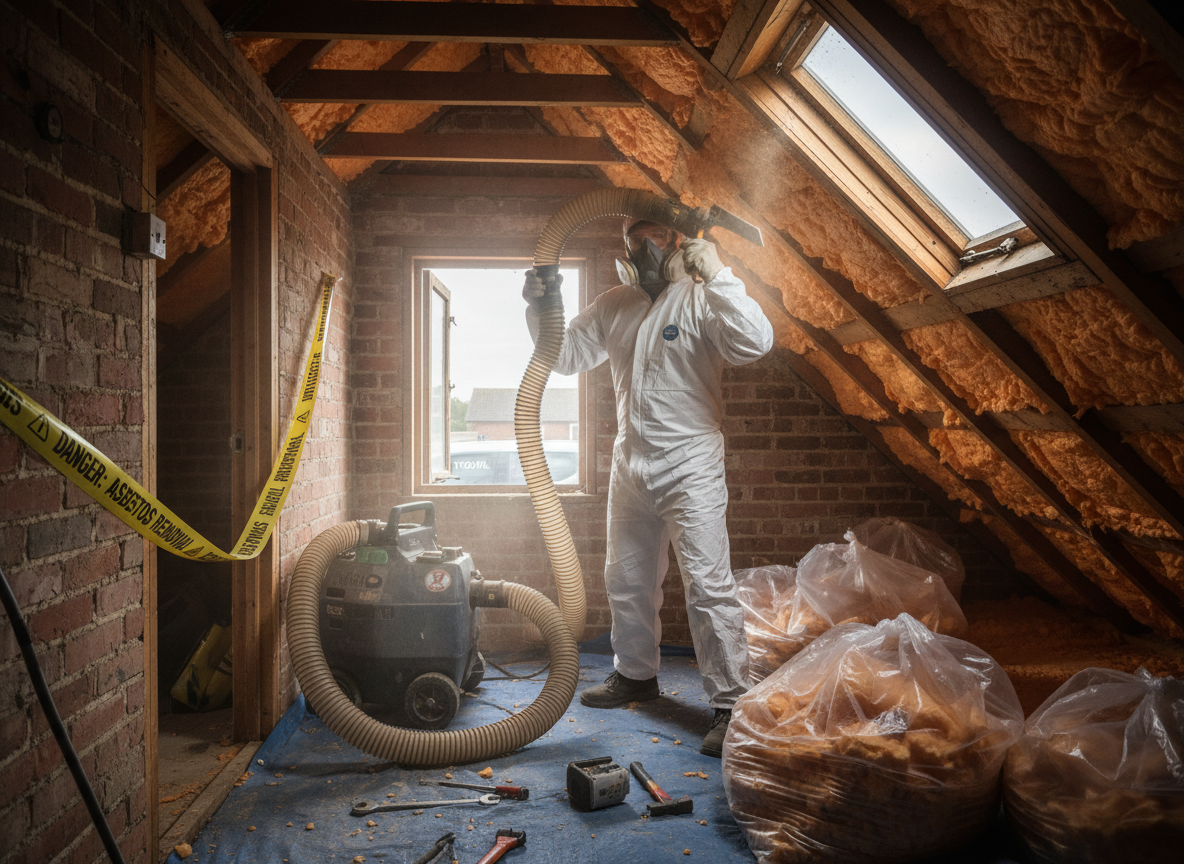
Spray foam insulation in Yeovil properties often consists of closed-cell polyurethane that bonds tightly to rafters, joists and masonry. In older terraces around the town centre and post-war semis in the surrounds, this material was frequently applied directly over original timber or lath without ventilation gaps, trapping moisture from Somerset’s frequent rainfall. Same-day removal requires immediate assessment of foam thickness and substrate condition to prevent ceiling or wall damage during extraction. Specialised negative-pressure equipment and solvent-free stripping methods are used to limit dust spread into living spaces below.
Homeowners in Yeovil often discover problems when condensation appears on ceilings or when roof leaks worsen because the foam blocks airflow. Removing the material the same day stops further saturation, especially during wet winter months when ground conditions around the Yeovil area keep humidity high. Disposal follows local waste regulations for construction materials; crews separate foam from timber and masonry on site before transport to approved Somerset facilities. Edge cases include foam applied over electrical cables or in narrow eaves where access is limited by the pitch of traditional Somerset roofs.
After extraction, the loft or cavity must be inspected for remaining residue that could affect new insulation or ventilation upgrades. In Yeovil’s stone and brick housing stock, crews check for hidden damp patches on gable walls that the foam had concealed. Same-day service includes temporary ventilation measures to allow the structure to dry before any follow-on work. Property owners should avoid disturbing the foam themselves, as improper cutting releases particles and can damage underlying plaster or wiring common in BA20 postcodes.
Technician insight
In Yeovil, the thing that catches most people out with same day Spray Foam Removal is the older Victorian terraces around the town centre where foam was often sprayed over original lath and plaster, making clean extraction tricky without damaging ceilings when the weather has already left the timber damp.
Damp Loft in Yeovil Terrace
A homeowner in central Yeovil reported musty smells after heavy rain. Inspection showed closed-cell foam blocking ventilation in the loft of a 1930s terrace. Same-day removal cleared the material, restored airflow along the eaves, and allowed the roof structure to begin drying without further water retention.
How it works
- 1
Site Assessment
Technician inspects the property in Yeovil to confirm foam type, depth and access points before starting work.
- 2
Containment Setup
Dust barriers and extraction units are positioned to protect living areas during removal.
- 3
Foam Extraction
Specialist tools strip the material from rafters and walls while maintaining negative pressure.
- 4
Clearance and Ventilation
All debris is removed, surfaces are wiped, and temporary vents are installed to aid drying.
Pricing
Same-day calls are quoted after inspection; cost varies with property age, foam depth and access in Yeovil homes.