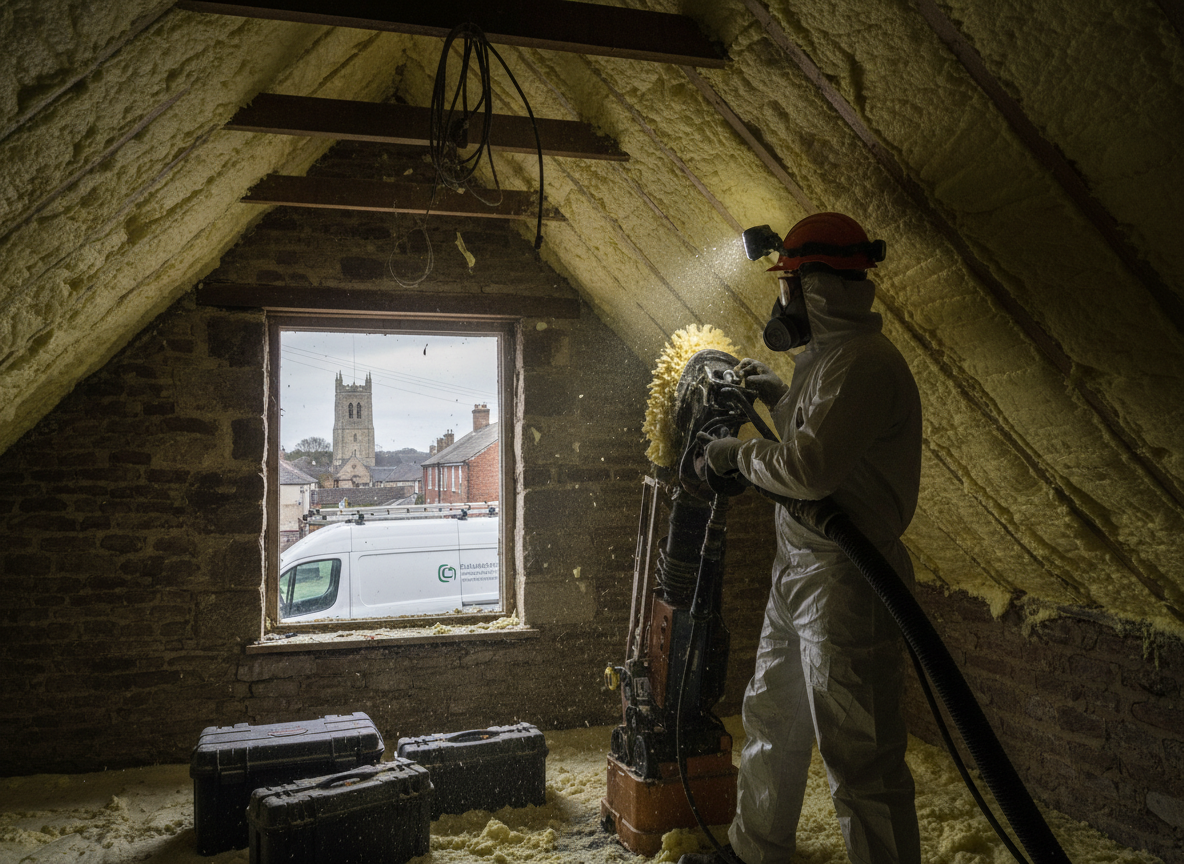
Spray foam installed in Yeovil properties from the 1970s onward often sits in narrow roof voids above Victorian terraces and post-war semis around the town centre and suburbs such as Preston and Hendford. Over time the material absorbs moisture from the damp Somerset climate, breaking down into a heavy, crumbly residue that traps against rafters and can affect ventilation. Removal requires careful sectioning to avoid disturbing original lath and plaster ceilings below while containing dust that travels easily through shared chimney stacks common in these streets.
Edge cases appear regularly in Yeovil when foam was applied over electrical cables or around chimney breasts in older stock near Princes Street. The 24/7 service responds to cases where foam has started to sag after heavy winter rain, creating hidden pockets that hold water against timber. Technicians cut and peel in controlled strips, using negative air machines to keep particles from settling into living spaces below, then bag waste for licensed disposal rather than leaving it on site.
Regulation notes matter because many Yeovil homes fall under conservation area rules that limit disturbance to original roof structures. Work must stop short of altering listed features and focus only on the foam layer itself. Homeowners are advised to inspect joist ends after removal because prolonged contact with degrading foam can leave timber surfaces coated in a residue that needs separate cleaning before any new insulation goes in.
Technician insight
In Yeovil the thing that catches most people out with 24/7 Spray Foam Removal is the tight roof voids in terraces along Princes Street and nearby streets where foam was pumped in around shared chimney flues; the constant damp from Somerset winters turns it into a sticky paste that clings to every joist and makes clean removal slower than owners expect.
Foam Sagging After Winter Rain
A homeowner in a 1930s semi near Yeovil town centre noticed insulation particles falling into the bedroom after heavy rain. Inspection showed foam breaking down around a chimney breast and holding moisture against the rafters. We sectioned and extracted the material overnight using contained methods, cleared the residue from the timbers, and left the void ready for inspection.
How it works
- 1
Initial Assessment
Visit the property in Yeovil to check foam depth, access points and any hidden services in the roof void.
- 2
Site Preparation
Set up containment sheeting and extraction equipment to protect rooms below and neighbouring properties.
- 3
Foam Extraction
Cut and remove sections methodically, working around joists and cables without damaging the original structure.
- 4
Clearance And Disposal
Vacuum remaining particles, clean surfaces and remove all waste from site for proper disposal.
- 5
Final Walkthrough
Show the cleared void and note any timber or ventilation points that need attention before new work begins.
Pricing
Cost depends on property age, foam thickness and access difficulty; upfront quotes given after inspection.