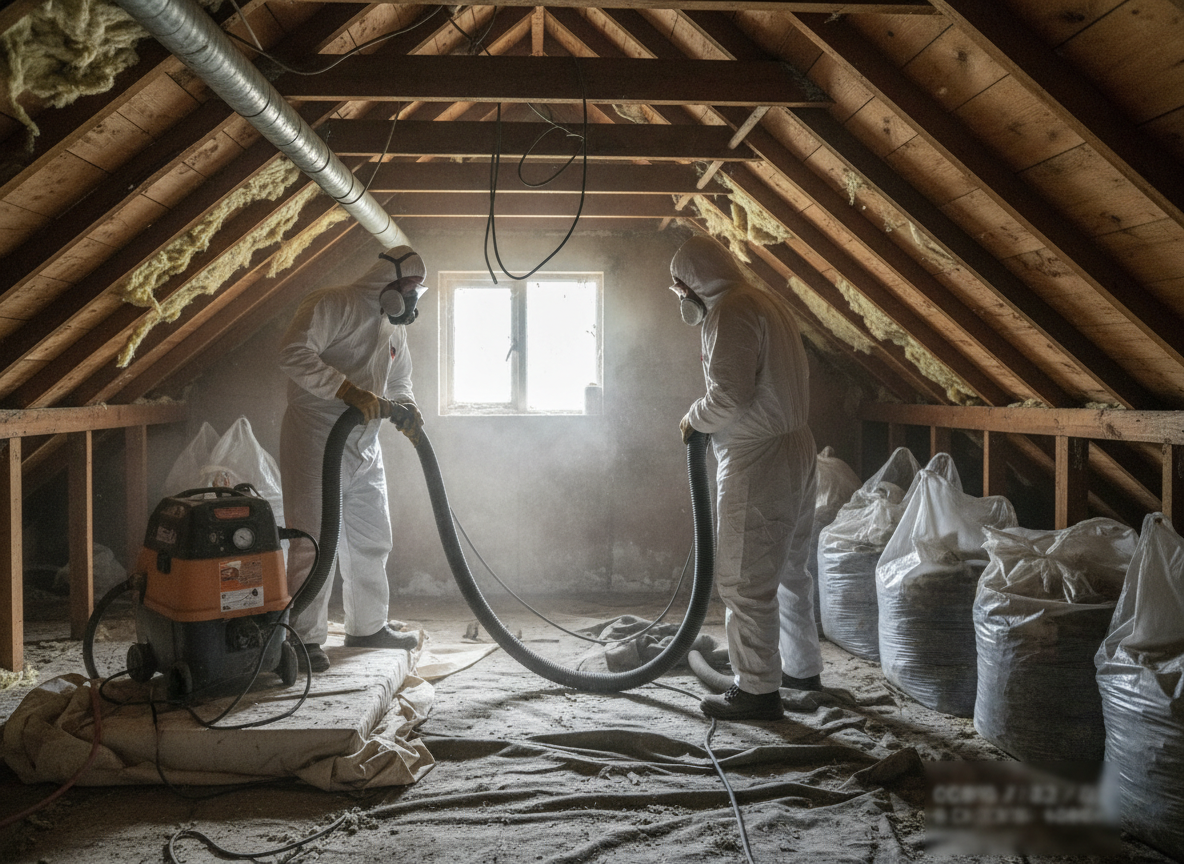
Spray foam removal in Yeovil often involves older terraced and stone-built homes common throughout Somerset where foam was applied decades ago to roofs and walls. These applications frequently trap moisture against masonry, creating hidden rot that only becomes visible once the foam is cut away. Technicians must work carefully around original lath and plaster ceilings and timber joists that have settled over time, using controlled mechanical removal rather than aggressive scraping that can damage fragile structures.
Weather patterns in the Yeovil area bring frequent damp winters that accelerate problems when closed-cell foam blocks ventilation in lofts. Homeowners notice musty smells or peeling paint first, signs that the foam has prevented normal airflow through traditional chimney stacks and eaves. Removal crews protect internal finishes with dust barriers and extract material in sections to avoid collapsing weakened plaster, then ventilate the space immediately to let stone walls dry before any new insulation is considered.
Edge cases appear regularly in Yeovil properties near the town centre where converted commercial buildings have foam injected into cavity walls. These jobs require checking for shared party walls and ensuring debris does not migrate into neighbouring lofts. Post-removal inspection often reveals corroded fixings or saturated timber that must be addressed before the property can be re-insulated safely.
Technician insight
In Yeovil the thing that catches most people out with insulation removal service is how often spray foam was sprayed straight onto the back of stone walls in Victorian terraces around the town centre. Once removed you find the mortar has stayed permanently damp because the foam stopped any evaporation, and that changes the whole job.
Hidden Damp in a Princes Street Terrace
Homeowner in central Yeovil noticed black mould on bedroom ceilings after heavy winter rain. Inspection showed closed-cell foam had been applied over the original lath in the 1990s. We removed the foam section by section, found saturated stone and timber, then ventilated the loft fully so the walls could dry before any further work.
How it works
- 1
Site Assessment
Inspect foam depth, substrate condition and access points in Yeovil properties before starting work.
- 2
Containment Setup
Install dust barriers and negative pressure systems to protect living areas during extraction.
- 3
Foam Extraction
Cut and remove spray foam in controlled sections while monitoring for hidden damp or structural issues.
- 4
Clearance and Ventilation
Remove all debris, clean surfaces and improve airflow to allow walls and timbers to dry.
Pricing
Costs depend on property size, foam thickness and access difficulty; we provide upfront quotes after inspection.