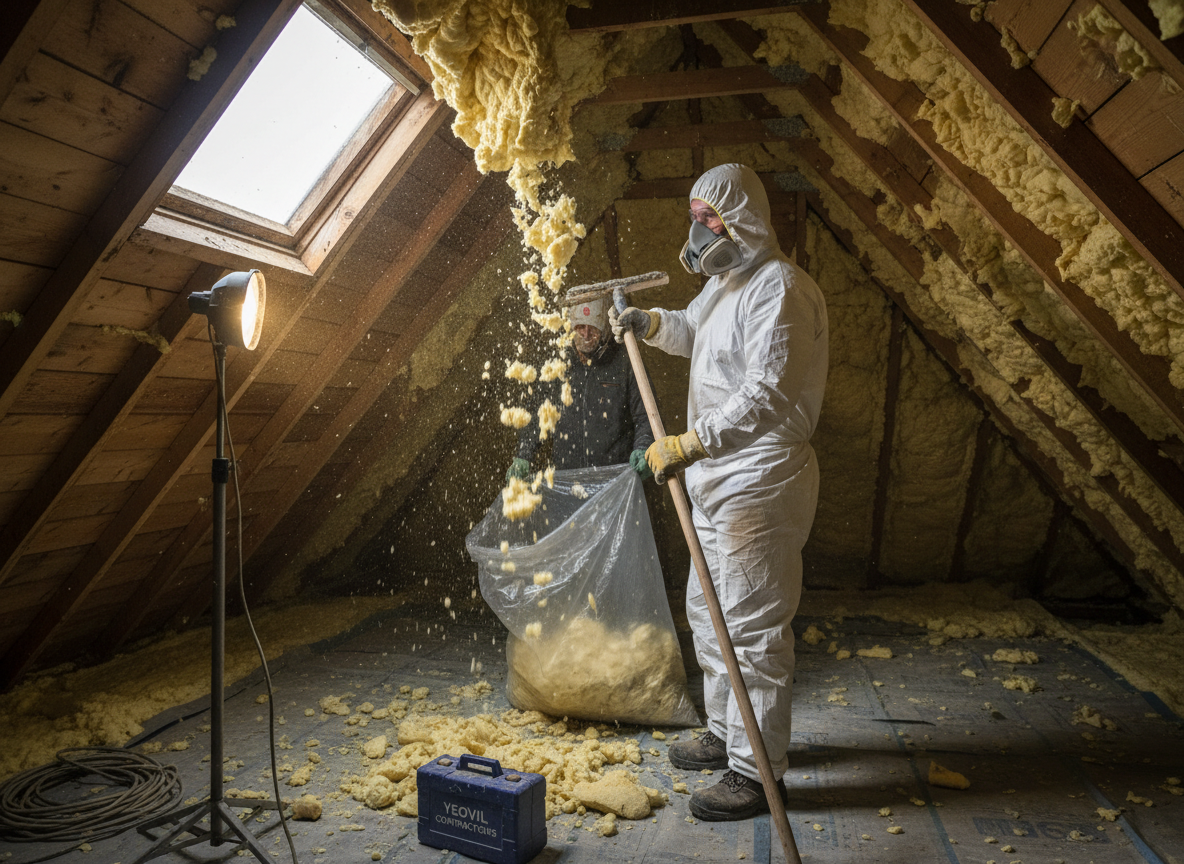
Yeovil's housing stock includes many early 20th-century terraces and post-war semis where spray foam was applied directly to rafters and joists. Over time the closed-cell material traps condensation against timber, especially during Somerset's frequent wet winters when roof spaces stay damp for weeks. Removing it requires careful solvent application and mechanical scraping to avoid damaging original lath and plaster ceilings below.
Access in Yeovil often means working through small loft hatches in narrow terraced homes near the town centre or on the slopes around the A30. Older properties frequently have mixed insulation layers from previous retrofits, so crews must separate foam from mineral wool or polystyrene without releasing fibres into living spaces. Proper negative-pressure containment is essential because many of these homes sit close together and share roof voids.
Disposal follows strict waste regulations because cured polyurethane is classed as non-hazardous but must still be taken to licensed sites rather than general landfill. In the Yeovil area this usually means transport to the recycling facility near Ilchester, adding time to jobs on tight residential streets where van access is limited.
Homeowners sometimes attempt DIY removal with basic scrapers, which leaves residue that continues to hold moisture and can cause rot in rafter ends within a single season. Professional crews use staged removal, starting at the eaves and working upward, then treat any exposed timber with preservative before new ventilation is installed.
Technician insight
In Yeovil, the thing that catches most people out with spray foam insulation removal is the way the foam bonds to the underside of old clay-tiled roofs on the steeper pitches around the town centre – once winter temperatures drop and the tiles contract, any residue left behind pulls moisture straight into the battens and you end up replacing timber you never planned to touch.
Terrace Loft in Central Yeovil
The owner of a 1920s terrace off Princes Street reported black mould on bedroom ceilings after heavy autumn rain. Inspection showed spray foam had sealed the original eaves vents and trapped moisture against the rafters. We removed the foam over two days, treated the timber, and added new ridge and eaves vents; the mould dried out within a month and no further damp appeared.
How it works
- 1
Site Assessment
Inspect the loft or wall cavities, identify foam type and depth, check for hidden timber damage, and note access constraints typical of Yeovil terraces.
- 2
Containment Setup
Install dust barriers and negative-pressure extraction to prevent particles migrating into living areas below.
- 3
Foam Extraction
Apply approved solvents section by section, mechanically remove the foam, and bag waste for licensed disposal.
- 4
Timber Treatment and Ventilation
Treat exposed joists, install new eaves and ridge ventilation, and confirm airflow meets current building standards.
- 5
Final Clearance
Remove containment, vacuum all surfaces, and walk the homeowner through the restored roof space.
Pricing
Cost varies with loft size, number of access points, and whether hidden timber repairs are needed; we give a fixed quote after the on-site assessment.