2026-10-22 ·
Clearing and Restoring After Spray Foam Removal in Somerset Homes
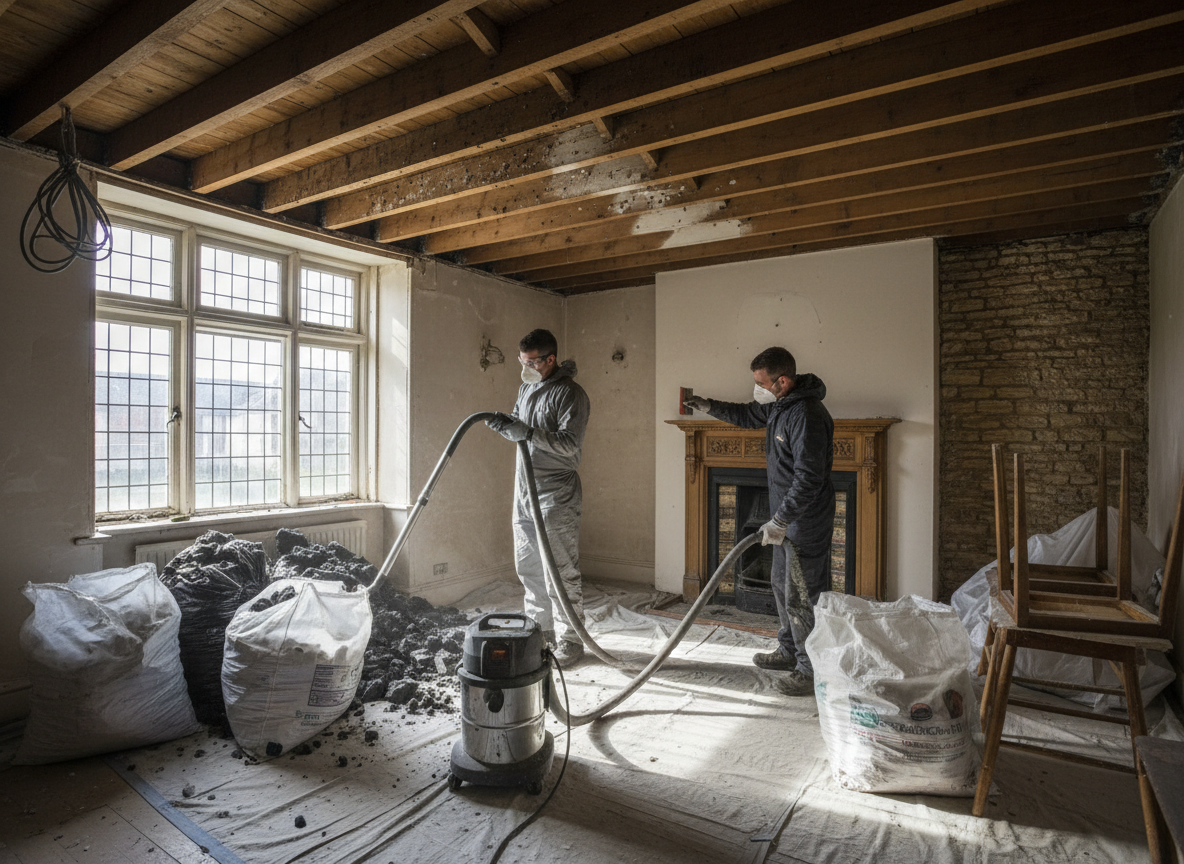
Clearing and restoring after spray foam removal in Somerset homes starts with full debris extraction and a moisture survey before any new materials go back in. In Yeovil and surrounds, older terraced and semi-detached houses often retain hidden damp pockets once the foam is gone, so the first task is confirming the structure is dry.
Initial Assessment and Safety Checks
After removal crews finish, walk the loft or roof space with a moisture meter and torch. Check joists, felt, and brickwork for staining or rot that spray foam sometimes masked. In Yeovil homes built before 1950, timber sizes vary and may need extra support once insulation weight is removed. Record every area that shows elevated readings so the restoration plan targets them first. Homeowners in nearby Sherborne often discover that ventilation gaps were blocked by previous foam layers, creating the need for new air bricks or ridge vents during this stage.
Clearing Debris and Waste Removal
Vacuum or bag all loose foam particles and dust before any cleaning solution touches surfaces. Use industrial HEPA vacuums on rafters and between joists to capture fine residue that ordinary shop vacs miss. In the Yeovil area, local waste rules require separate bagging of cured foam as non-hazardous construction waste, so arrange skip collection or licensed haulage on the same day. Number each bag on a simple log so you can confirm nothing is left behind when the space is reinspected. This step prevents later complaints about particles drifting into living areas below.
Managing Moisture and Ventilation
Somerset winters bring prolonged damp periods that can re-wet timber once foam is gone, so install temporary dehumidifiers for at least seven days while readings stabilise. Open all existing vents and add temporary ridge ventilation if the roof lacks it. Properties around Crewkerne and Martock frequently show higher baseline humidity because of clay soils, making this drying window essential before new insulation or boarding goes down. Check the underside of tiles or slates for condensation trails that may have been hidden by the old foam.
Restoring Insulation and Structural Finishes
Once moisture levels sit below 15 percent, choose replacement insulation suited to the roof pitch and access constraints common in Yeovil terraces. Mineral wool or rigid boards fit irregular joist spacing better than re-spraying in many cases. Re-fix any displaced felt or add new breathable membrane where original material was cut during removal. For listed buildings in Yeovil, consult the related article on how listed buildings handle spray foam removal before choosing finishes that meet conservation requirements. Finally, reinstall loft boards or flooring with 10 mm expansion gaps at walls to allow for seasonal movement.
Homeowners who follow these steps in sequence reduce callbacks and keep restoration costs predictable. Further reading on cost factors appears in the article Factors That Influence Spray Foam Removal Costs Around Yeovil, while those needing ongoing support can review residential spray foam removal options at /services/residential-spray-foam-removal.