2026-10-22 ·
Signs Your Yeovil Loft Spray Foam Has Failed During Winter
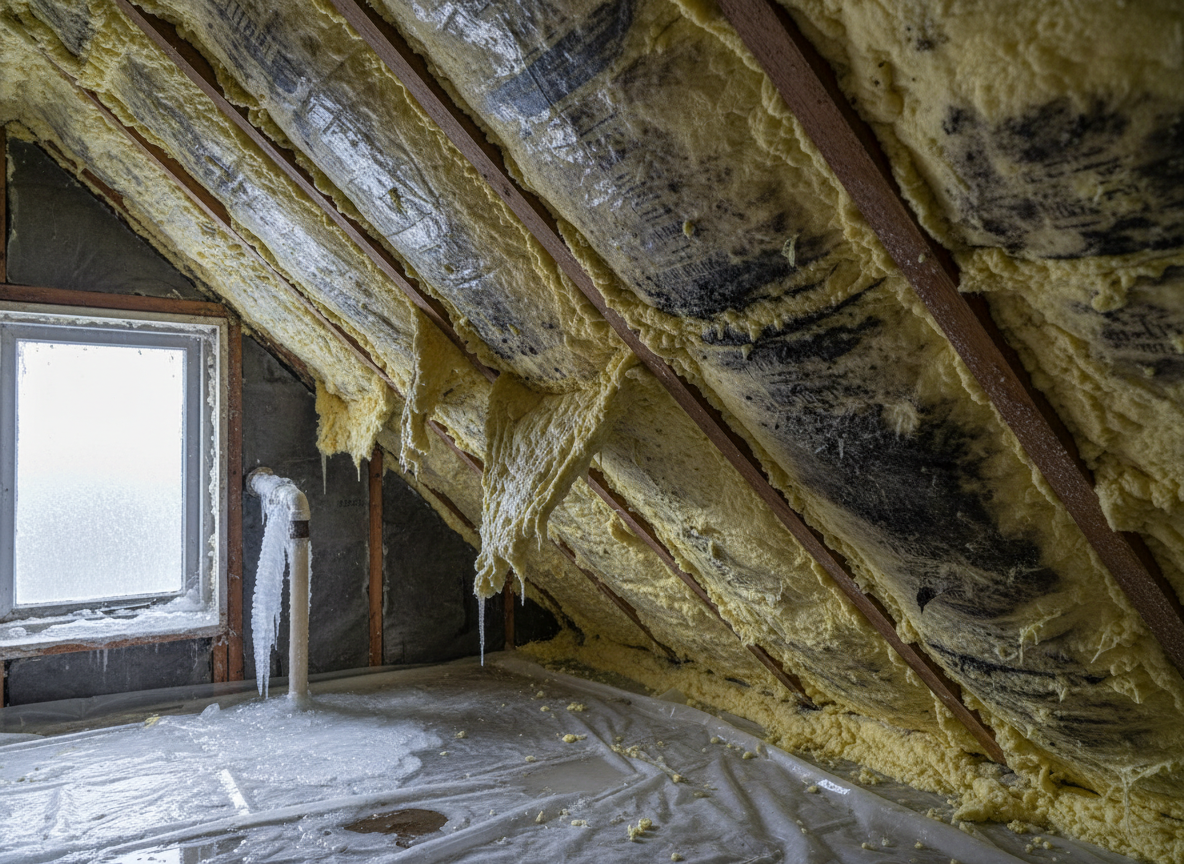
Failed spray foam in Yeovil lofts first appears as heavy condensation on roof timbers and windows once overnight temperatures fall below 5°C. This occurs because the insulation no longer creates an effective thermal barrier, allowing warm interior air to meet cold roof surfaces and form moisture that soaks into timber and plaster.
Condensation and Ice Build-Up on Roof Timbers
In Yeovil’s older terraced and semi-detached properties, spray foam applied directly to rafters traps moisture when it breaks down. During December and January cold spells, homeowners see frost or ice crystals forming on the underside of the roof where the foam has delaminated. Water then drips onto insulation below, creating dark streaks on ceilings in bedrooms and bathrooms. These signs differ from normal winter damp because they appear only after the foam has lost adhesion, usually 8–12 years after installation. Checking the loft with a torch on a frosty morning shows whether the foam has cracked or pulled away from the rafters.
Mould Growth and Musty Odours in Living Spaces
Mould colonies appear on bedroom ceilings and along the top of external walls within weeks of foam failure in the Yeovil area. The closed-cell type that was popular in Somerset homes expands and contracts with temperature swings, opening small gaps that let warm moist air reach cold surfaces. Black spots form first above radiators and in corners where heat rises into the loft. A persistent musty smell in upstairs rooms, especially after rain, indicates the foam no longer blocks vapour movement. Residents in streets around Princes Street and the town centre report this pattern every winter once the original installation reaches its effective lifespan.
Rising Energy Bills and Uneven Room Temperatures
Yeovil households see heating costs increase by 25–40 % once loft spray foam stops performing. The foam’s R-value drops sharply when it absorbs water or separates from the roof deck, allowing heat to escape through the 150–200 mm gaps that form. Bedrooms stay colder than ground-floor rooms because the loft no longer buffers the roof space. Comparing gas meter readings from the same week in previous winters provides clear evidence that the insulation has failed rather than a boiler issue.
Structural Timber Decay Risks Specific to Somerset Homes
Yeovil’s Victorian and Edwardian housing stock relies on breathable roof construction that spray foam can compromise when it fails. Water held against rafters for months leads to wet rot, visible as soft, darkened timber when inspected from inside the loft. In areas such as Sherborne and Crewkerne, where similar housing exists, surveyors now flag this decay during mortgage valuations. Early removal prevents the need for full rafter replacement that can cost several thousand pounds.
loft spray foam removal restores the roof to its original ventilated state and allows proper assessment of any timber damage.
Clearing and Restoring After Spray Foam Removal in Somerset Homes explains the drying and repair steps required after winter moisture has already affected ceilings and joists.
When to Arrange a Professional Loft Inspection
Homeowners should book an assessment as soon as condensation or mould appears, rather than waiting for the next heating season. A 24/7 service operating from Ceres Natural Foods Ltd, 9-11 Princes St, Yeovil BA20 1EN can attend within hours during severe weather. The inspection measures moisture content in timber and checks foam adhesion across the entire roof plane. Early action limits damage and keeps restoration work straightforward compared with properties left untreated through multiple winters.